Building a startup in 2026 without a reliable communication system is like trying to run a Formula-1 race on bicycle tires. You might move forward, but not at the speed you need. Today’s startups operate in hybrid environments, hire globally, and rely heavily on cloud telephony solutions to stay competitive. Traditional landlines simply cannot keep up with remote teams, AI workflows, and fast-moving customer expectations.
This is where modern business VoIP providers step in. These platforms don’t just offer calling—they combine messaging, video, automation, CRM integrations, and AI insights into one centralized communication hub. According to recent VoIP industry comparisons, modern business phone systems now typically cost between $15 and $80 per user monthly, offering advanced AI features and security improvements that were once enterprise-only capabilities.
If you’re searching for the best VoIP for startups, this guide compares the top platforms, features, pricing insights, and which systems work best for early-stage companies versus scaling teams.
Let’s break it down.
Why Startups Need VoIP Instead of Traditional Phone Systems
Cost advantages of cloud telephony
Startups survive on runway. Every dollar saved extends survival time. That’s exactly why cloud telephony solutions have become the default choice for founders instead of hardware-heavy PBX systems. Traditional phone infrastructure requires installation, maintenance, and hardware purchases. VoIP removes those barriers completely by running through the internet.
Think about it like switching from owning servers to using AWS. You only pay for what you use. Modern VoIP systems typically operate on subscription pricing and eliminate upfront telecom infrastructure investments. Research shows most cloud phone systems also avoid large setup costs because everything is hosted remotely.
For startups, this translates into:
- No hardware investments
- Easy remote setup
- Instant number provisioning
- Flexible monthly pricing
- Simple scaling as hiring increases
That last point matters more than people realize. Imagine hiring 15 employees in one quarter. With VoIP, you simply add users. With traditional systems, you might need new wiring or equipment.
Cost isn’t just about price either. It’s about operational efficiency. VoIP tools often bundle CRM integrations, analytics, and collaboration features that would otherwise require multiple subscriptions. When founders combine communication tools into one platform, they reduce SaaS sprawl—a silent budget killer.
Remote work compatibility
Modern startups aren’t built in offices anymore. They’re built in Slack channels, Zoom meetings, and Notion docs. Communication systems must reflect that reality.
VoIP tools enable employees to take business calls from laptops or mobile apps. This means your sales rep in Bangalore, developer in Berlin, and founder in Singapore can all operate under one phone system.
Today’s VoIP tools for remote teams typically include:
- Softphone apps
- Browser calling
- Team messaging
- Video meetings
- Call routing across time zones
Many platforms now also include unified communications features combining voice, video, SMS, and internal chat in one interface.
It creates something powerful: location independence.
And for startups, location independence equals hiring freedom.
How We Ranked the Best VoIP for Startups
Features considered
Not all VoIP systems are built for startups. Some are designed for enterprises with complex call centers. Others target freelancers.
To identify the best VoIP for startups, we evaluated platforms based on real business needs rather than marketing promises. Industry comparisons typically assess dozens of metrics including integrations, pricing, support, and usability.
Key criteria included:
- Ease of setup
- CRM integrations
- Call analytics
- AI automation
- Remote usability
- Customer support features
- Mobile apps
- API availability
- Pricing flexibility
The most important factor? Speed of adoption.
Startups cannot spend three months implementing telecom systems. The best providers allow same-day deployment and intuitive dashboards.
Pricing and scalability factors
Scalability determines whether a VoIP tool becomes a growth partner or a future migration headache.
A good startup phone system should support:
- 5 users today
- 50 users next year
- 500 users eventually
Top VoIP systems achieve this through modular pricing and cloud architecture. Many providers also offer different tiers allowing startups to upgrade gradually rather than overpay early.
Another overlooked factor is integration scalability. If your VoIP cannot connect with your CRM, support desk, or marketing tools, you’ll hit productivity limits quickly.
Smart founders choose communication systems like they choose databases—thinking three years ahead.
Quick Comparison Table of Top Startup Phone Systems
| Provider | Best For | Key Strength | Ideal Startup Stage |
|---|---|---|---|
| RingCentral | All-in-one communications | Collaboration tools | Scaling startups |
| Dialpad | AI calling | Automation insights | SaaS teams |
| Aircall | Sales & support | CRM integrations | Growth startups |
| Nextiva | Customer experience | Unified communication | Established startups |
| Grasshopper | Simple virtual numbers | Easy setup | Early startups |
| Zoom Phone | Budget solution | Video integration | Remote startups |
| Vonage | Custom workflows | API flexibility | Tech startups |
| 8×8 | Global teams | International calling | Global startups |
| OpenPhone | Startup simplicity | Shared inbox | Small teams |
| Ooma | Ease of use | Reliability | Small offices |
10 Best VoIP Tools for Startups
1. RingCentral
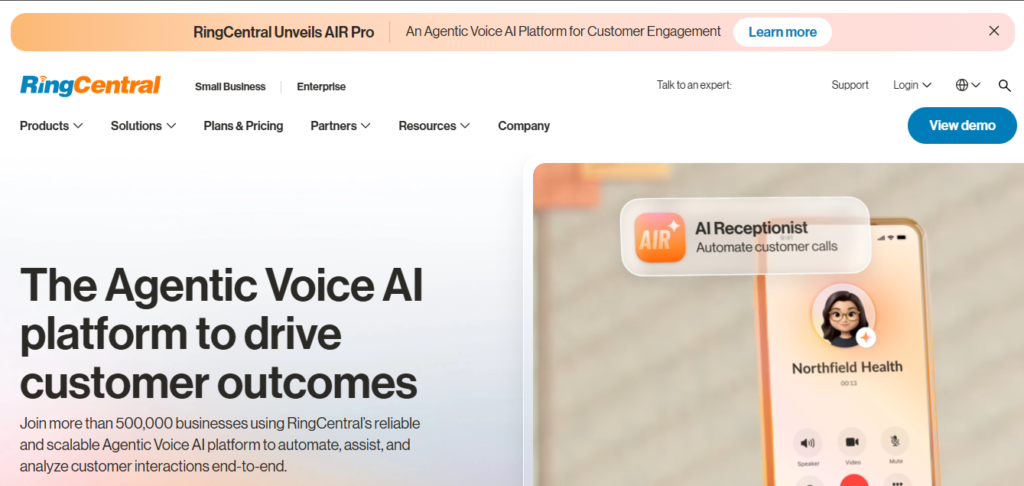
RingCentral continues to dominate conversations around business VoIP providers because of its comprehensive feature stack. It’s essentially the Swiss Army knife of startup communication platforms.
The platform combines voice, messaging, video meetings, file sharing, and collaboration tools into one unified interface. Industry reviews consistently highlight its strong team collaboration functionality, making it appealing for growing companies.
What makes RingCentral especially useful for startups is its flexibility. Early-stage companies can start with basic calling and gradually adopt advanced analytics and AI tools.
Key strengths include:
- Team messaging
- Workflow integrations
- Mobile-first communication
- Enterprise-grade reliability
- Global number availability
The only drawback is complexity. Some startups may find the feature set overwhelming initially. But companies planning aggressive scaling often see this as future-proofing rather than a downside.
For startups planning Series A growth, RingCentral is often a safe long-term bet.
2. Dialpad
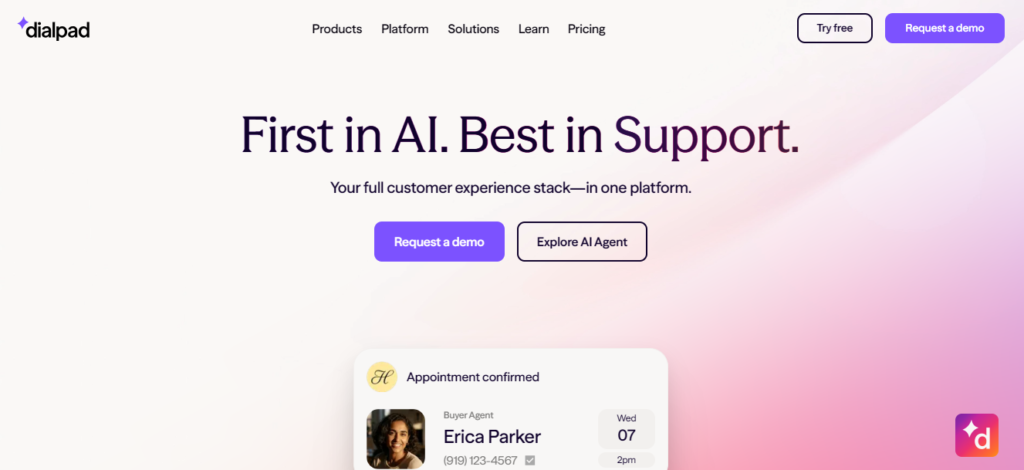
Dialpad positions itself as the AI-first VoIP platform. If RingCentral is a Swiss Army knife, Dialpad is a smart assistant.
Its biggest differentiator is voice intelligence. Calls can be transcribed, analyzed, and summarized automatically. This turns conversations into actionable data instead of forgotten discussions.
Recent comparisons highlight Dialpad as particularly strong in AI automation and workflow optimization.
This matters because startups thrive on iteration. Imagine knowing:
- Which sales phrases convert best
- Where customers get frustrated
- How support conversations trend
- Which objections repeat
Dialpad helps answer those questions.
It’s particularly strong for:
- SaaS startups
- Sales teams
- Customer success teams
- Remote support teams
Startups building data-driven cultures often appreciate Dialpad’s insights because it aligns communication with metrics.
3. Aircall
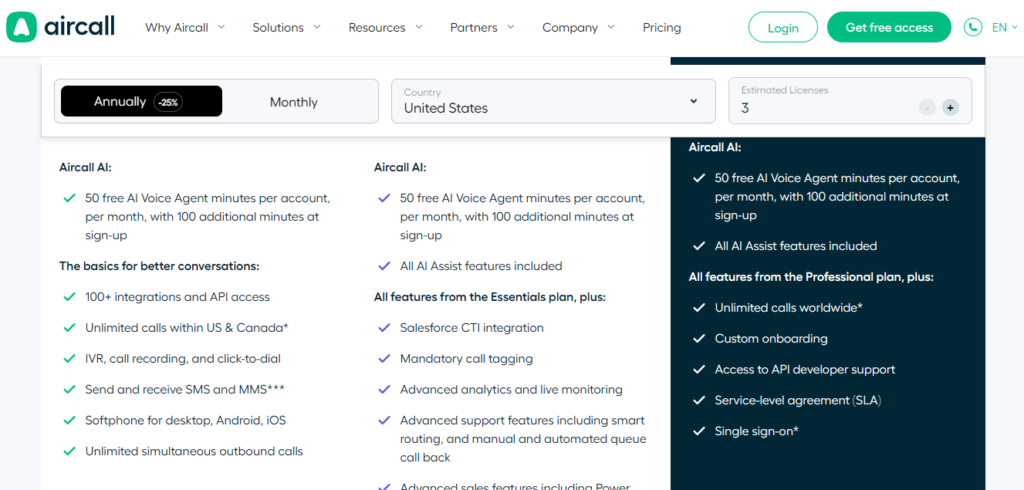
Aircall deserves its place among the best VoIP for startups because it focuses on one critical area: customer conversations.
Instead of trying to be everything, Aircall focuses deeply on sales and support communication workflows. This focus makes it incredibly powerful for startups building customer-facing teams.
Recent comparisons show Aircall offers deep integrations with CRM and helpdesk tools and strong scalability for SMB and mid-market teams.
What startups love about Aircall:
- 200+ integrations
- Fast setup
- Call monitoring tools
- CRM syncing
- Support workflow automation
If your startup depends heavily on customer support or outbound sales, Aircall feels purpose-built.
Here’s where Aircall shines most:
Customer conversations are the heartbeat of early-stage companies. Aircall helps founders actually understand those conversations rather than just handle them.
Startups building inside sales teams often find Aircall improves response time, accountability, and customer experience.
That’s why it ranks comfortably inside the top three.
4. Nextiva
Nextiva is often described as the platform that blends reliability with customer experience management. If Aircall focuses on conversations, Nextiva focuses on relationships.
It combines voice, video, CRM functionality, and customer interaction tracking into one ecosystem. Reviews often highlight its unified inbox and omnichannel support capabilities.
This makes it appealing for startups that want:
- Voice
- Social support
- CRM visibility
- Customer analytics
In other words, it’s not just a phone system—it’s a customer communication platform.
The platform works particularly well for startups transitioning from early traction to structured customer operations.
5. Grasshopper
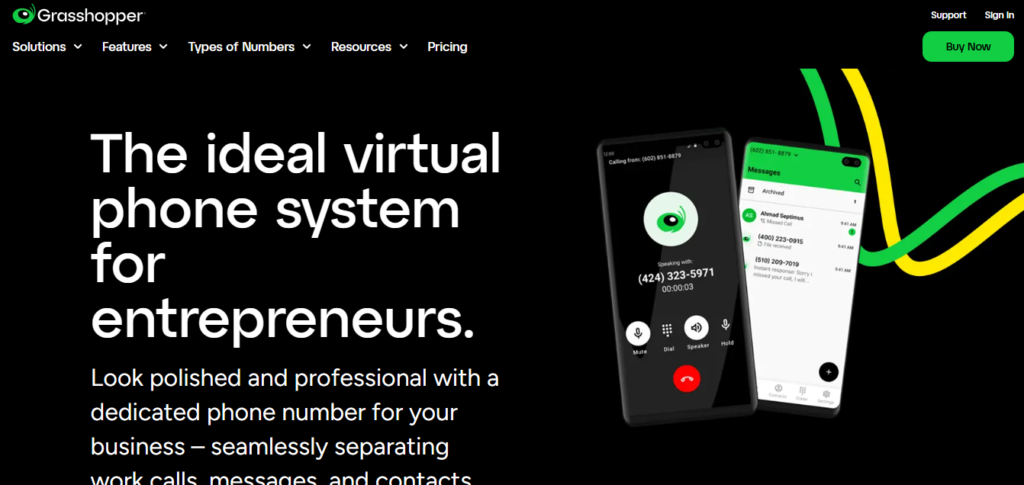
Grasshopper takes the opposite approach from feature-heavy systems. It focuses on simplicity.
This makes it ideal for very early startups needing a professional number without complexity. The system provides virtual numbers, voicemail, and call routing without advanced collaboration tools.
Industry analysis describes Grasshopper as best suited for small teams and solopreneurs due to its simple call management capabilities.
It works well if you need:
- Business number separation
- Call forwarding
- Basic routing
- Professional voicemail
But if you need deep analytics or collaboration tools, you may outgrow it quickly.
Think of Grasshopper as the starter apartment of VoIP systems.
6. Zoom Phone
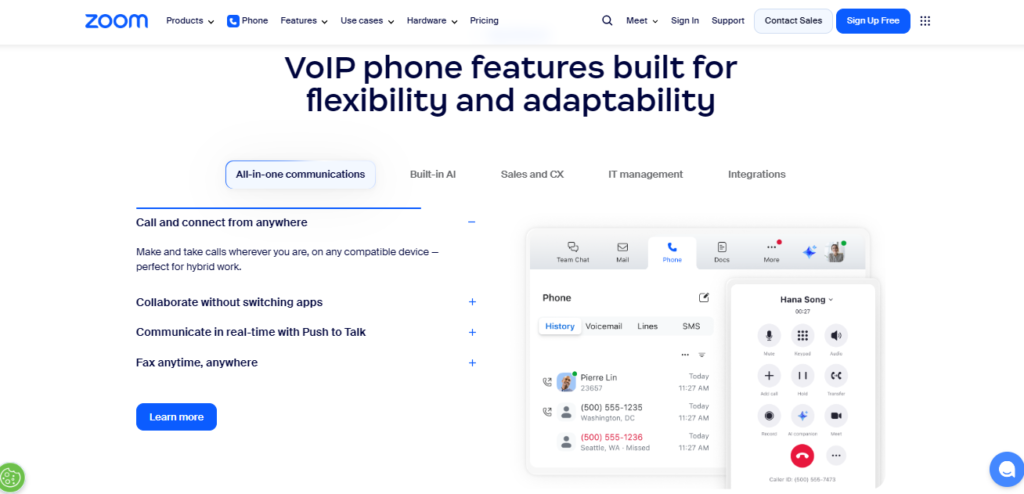
Zoom Phone benefits from brand familiarity. Many startups already use Zoom meetings, making adoption friction almost zero.
The phone system integrates seamlessly with the existing Zoom ecosystem. That alone can justify choosing it.
It typically appeals to:
- Remote startups
- Distributed teams
- Video-heavy workflows
- Budget-conscious founders
Its simplicity is its advantage.
7. Vonage
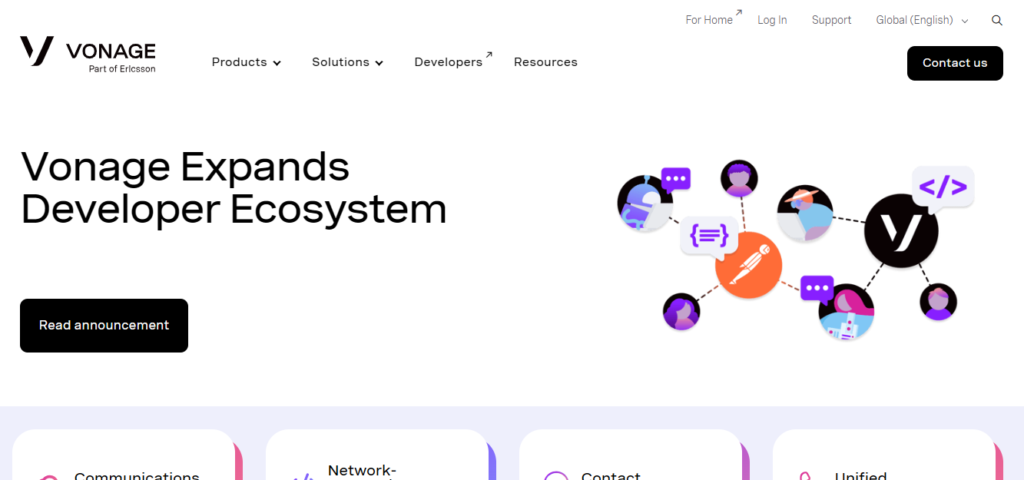
Vonage stands out because of customization. Startups building unique communication workflows often choose Vonage because of its APIs.
If your startup builds internal tools, Vonage offers flexibility to embed calling into your product workflows.
That makes it attractive to:
- Fintech startups
- SaaS platforms
- Marketplace companies
Developers often appreciate this flexibility.
8. 8×8
8×8 focuses heavily on global communication. Startups expanding internationally often find it attractive.
Its strengths include:
- International calling
- Contact center tools
- Compliance features
- Omnichannel support
Global startups need this level of infrastructure early.
9. Quo (Formerly OpenPhone)
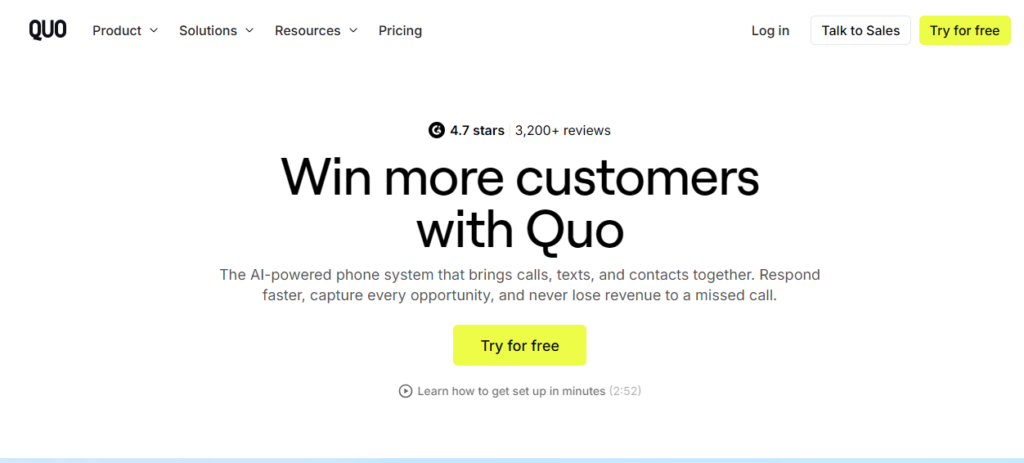
Quo has become popular among startup founders because it feels built by startup people.
The shared inbox model makes collaboration easy. Teams can manage conversations together rather than individually.
It works especially well for:
- Small SaaS teams
- Agencies
- Startup founders
- Remote teams
Its biggest advantage is usability.
10. Ooma Office
Ooma focuses on reliability and ease of use. Startups wanting something stable without complexity often choose it.
It provides:
- Virtual receptionist
- Call routing
- Voicemail
- Mobile apps
It’s often chosen by small operational teams needing dependable voice service.
How to Choose the Right Startup Phone System
Must-have features checklist
Choosing a VoIP provider isn’t about picking the most features. It’s about choosing the right ones.
Startups should prioritize:
- CRM integrations
- Call routing
- Mobile apps
- Analytics dashboards
- AI automation
- API access
- Security features
Many modern VoIP systems now include AI transcription, sentiment analysis, and automated summaries.
These features used to be luxury tools. Now they’re productivity essentials.
Mistakes startups should avoid
The biggest mistake is choosing based only on price.
Cheap systems often lack scalability. Migration later costs more than starting right.
Other mistakes include:
- Ignoring integrations
- Not testing call quality
- Overbuying features
- Ignoring support quality
Founders should think of VoIP like choosing a co-founder. Pick stability and long-term fit.
VoIP Trends Startups Should Watch in 2026
AI powered calling
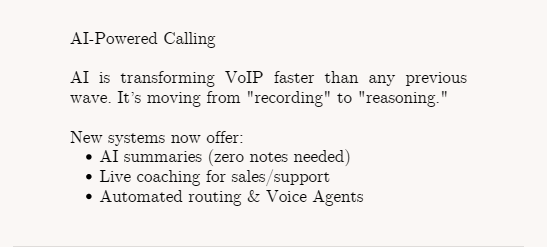
AI is transforming VoIP faster than any previous innovation wave.
New systems now offer:
- AI summaries
- Live coaching
- Automated routing
- Voice agents
AI is turning communication into intelligence.
Unified communications
Startups no longer want five communication tools. They want one.
Unified communications platforms combine:
- Voice
- Video
- Chat
- SMS
- Collaboration
This consolidation trend is accelerating.
Conclusion
Choosing the best VoIP for startups isn’t about picking the biggest brand. It’s about choosing the platform that matches your growth stage, communication style, and hiring plans.
If you want a safe all-around platform → RingCentral
If you want AI insights → Dialpad
If you want sales/support power → Aircall
If you want simplicity → Grasshopper
If you want CX focus → Nextiva
The best startup founders don’t just choose tools. They choose infrastructure that supports momentum.
Your VoIP system becomes the nervous system of your company.
Choose wisely.
FAQs
What is the best VoIP for startups in 2026?
RingCentral, Dialpad, Aircall, and Nextiva are among the best choices depending on whether your startup prioritizes collaboration, AI automation, customer support, or unified communications.
How much does a startup phone system cost?
Most VoIP systems cost between $15 and $80 per user monthly depending on features, AI capabilities, and integrations.
Is VoIP reliable for remote teams?
Yes. Modern VoIP platforms are designed for distributed teams and include mobile apps, browser calling, and global routing features.
Which VoIP is best for customer support startups?
Aircall and Nextiva are often considered strong choices because of their CRM integrations and support workflow features.
Can startups scale VoIP systems easily?
Yes. Most cloud VoIP platforms allow instant user additions and feature upgrades without hardware changes.